Trading Online Voucher 2026: What Replaced It and How to Use It
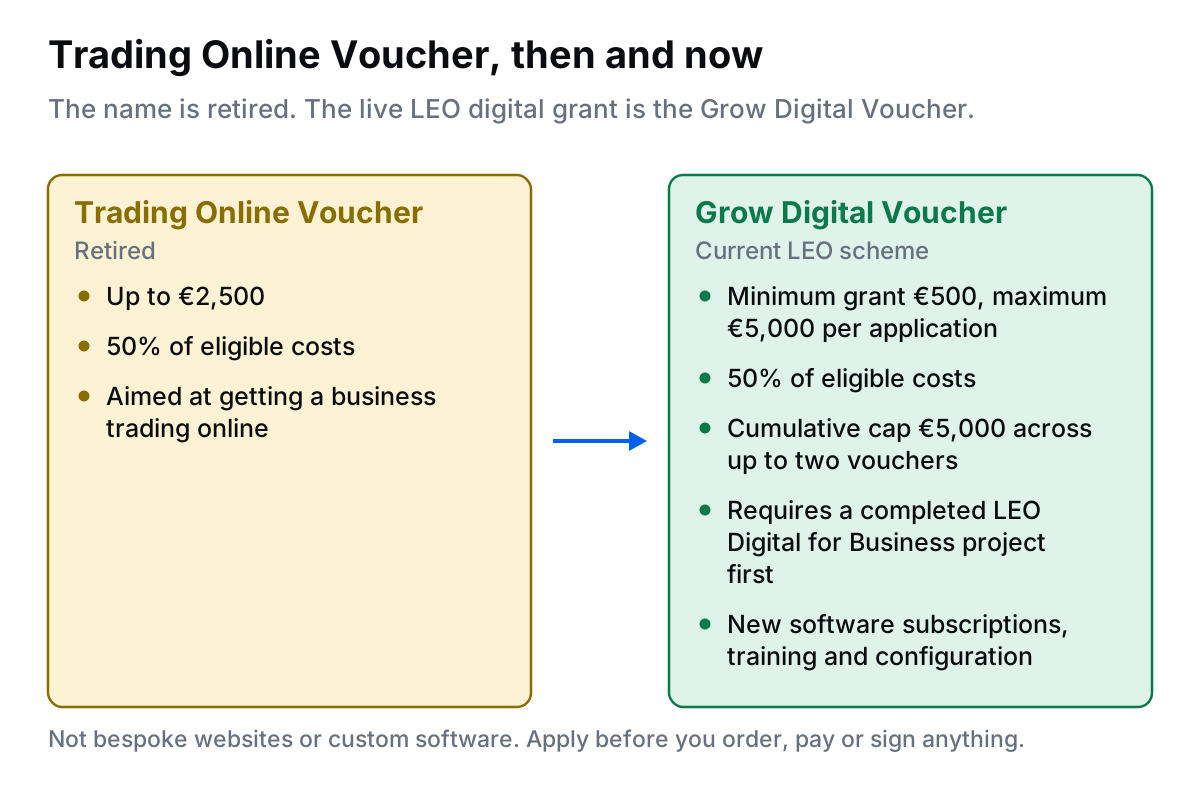
The Trading Online Voucher (TOV) was the Local Enterprise Office grant that paid half the cost of getting a small Irish business online, up to €2,500. It has been replaced. The current LEO scheme is the Grow Digital Voucher: 50% of eligible costs, from €500 up to €5,000, for software, training and IT configuration. This guide explains what changed, who qualifies, what it pays for, and how to apply without tripping over the rules.
One warning before the detail. Grant terms change. Every figure below comes from the Local Enterprise Office website at the time of writing and is cited so you can check it. Your local LEO makes the final call on eligibility, so talk to them before you spend a cent.
What happened to the Trading Online Voucher?
For a decade the TOV was the go-to grant for Irish micro-businesses building a first website or online shop. LEO has now folded it into a broader digital programme. The Trading Online Voucher page on localenterprise.ie is still there but has no scheme detail, and the LEO menu points to the Grow Digital Voucher instead. If you search for "trading online voucher 2026", Grow Digital is what you will actually apply for.
The change matters in three ways. The ceiling is higher (€5,000 rather than €2,500). The scope is wider (software of many kinds, not just a website). And there is a new first step: a Digital for Business project with a LEO consultant, which produces the report your voucher application must follow.
Who is eligible?
According to LEO, the Grow Digital Voucher is open to small enterprises that:
- have between 1 and 50 paid employees, and turnover or balance sheet of €10 million or less (the EU small enterprise definition, including linked companies);
- have completed a Digital for Business project within the previous two years;
- are not current clients of Enterprise Ireland or IDA;
- are established, registered and trading for at least six months in the LEO's area;
- are solvent, and hold current tax clearance from Revenue (you supply a Tax Reference Number and Tax Clearance Access Number).
Sole traders, partnerships and companies all qualify. Some sporting bodies and charities that carry on a taxable trade also qualify. Excluded are trade associations, non-commercial bodies, the coal and steel sectors, primary agriculture, fishery and aquaculture, and activities LEO considers a reputational risk (gambling, adult entertainment, tobacco, unlicensed cannabis products).
How much is the voucher and how does match funding work?
LEO states the grant is 50% of eligible costs, with a minimum of €500 and a maximum of €5,000 per application. A business can be approved for a maximum of two Grow Digital Voucher projects, up to a cumulative cap of €5,000. A second voucher depends on showing progress against the Digital for Business report.
In plain numbers: a €4,000 project gets €2,000 back. A €10,000 project gets the €5,000 maximum. A €900 project is below the €500 minimum grant and does not qualify. You pay the supplier in full first, then claim. Budget for VAT and for the gap between paying and being reimbursed.
What can it pay for?
The LEO page lists two cost headings.
1. Software subscriptions that are new to the business, off the shelf, for a maximum of one year. Examples LEO gives include:
- e-commerce platforms and website software (subscription-based, not bespoke builds);
- customer relationship management (CRM);
- online booking, payments or appointment systems;
- job tracking and field service management;
- order management and stock control;
- electronic invoicing and e-signature;
- cloud accounting or payroll, if you are moving to the cloud;
- cyber security software;
- analytics software, including AI systems.
2. Training and IT configuration: expert help to set up or integrate the new system, and training so your team can use it. LEO caps training and configuration combined at 50% of the total project cost.
Not covered: bespoke website development, custom software, extra licences for software you already use, and systems for regulatory compliance.
For a small service business this often means the voucher covers a booking platform, a CRM, an invoicing tool and the hours to connect them, while a bespoke website is paid separately. If you are weighing that up, our guides to website costs in Ireland and grants for automation give the numbers.
How do you apply?
- Contact your local LEO. There are 31 offices. LEO states every application should be discussed with your office first.
- Complete a Digital for Business project. A LEO-assigned consultant reviews your systems and produces a report with recommended steps. This is a required prerequisite for the voucher.
- Get quotes. Written quotes from suppliers for the software, configuration and training named in your report.
- Submit the application through your LEO with quotes, tax clearance details and financial statements. Do this before any spend or activity.
- Wait for approval. Do nothing on the project until you have it in writing.
- Deliver, pay, claim. Complete the project, pay suppliers in full, then submit invoices and proof of payment to draw down the grant.
What are the common mistakes?
- Starting before approval. LEO is explicit: committing, ordering, paying or beginning work before the application is submitted can make the project ineligible.
- Assuming it pays for a bespoke website. It does not. Plan for a subscription platform, or fund a custom build separately.
- Skipping Digital for Business. No report, no voucher.
- Letting tax clearance lapse. Check it on ROS the week you apply.
- Buying tools you will not use. The grant reimburses half; the other half and the monthly renewals are yours. Choose fewer tools and get the configuration hours to make them work together.
- Relying on old blog posts. Many pages online still quote TOV figures. Trust the LEO page and your local office.
Planning a project that fits the voucher?
FMOps helps Irish small businesses choose the right booking, CRM and invoicing tools and connects them so admin runs itself. Automation projects start from €500 and websites start from €500. If you are looking at AI tools specifically, see the Grow Digital Voucher for AI projects guide. Start with the free automation audit, or book a free call and bring your Digital for Business report if you have one.
Frequently asked questions
Does the Trading Online Voucher still exist in 2026?
Not under that name. The Local Enterprise Offices replaced the Trading Online Voucher with the Grow Digital Voucher. The LEO website still has a Trading Online Voucher page, but the live scheme, figures and forms are for Grow Digital. Check with your local LEO before you plan around any figure.
How much is the Grow Digital Voucher worth?
At the time of writing, LEO states the grant is 50% of eligible costs, from a minimum of €500 up to a maximum of €5,000 per application, with a cumulative cap of €5,000 across a maximum of two vouchers. Figures can change, so confirm with your local office.
Do I have to do the Digital for Business project first?
Yes. LEO states the Grow Digital Voucher is open to businesses that have completed a Digital for Business project within the previous two years. Ask your LEO about Digital for Business first, then apply for the voucher against the report it produces.
Can the voucher pay for a new website?
It can pay for website software subscriptions that are new to the business, such as an e-commerce or booking platform, plus training and configuration. LEO states it does not support bespoke website development, and custom software is ineligible. Ask your LEO how your specific plan fits.
Can I start the work before I apply?
No. LEO states an application must be submitted before any expenditure is incurred or project activity commences. Ordering, paying a deposit or signing a contract first can make the whole project ineligible.
Who is not eligible for the Grow Digital Voucher?
Businesses with more than 50 employees, businesses trading for under six months, current Enterprise Ireland or IDA clients, businesses without tax clearance, and businesses in excluded sectors such as primary agriculture, gambling and adult entertainment. The LEO page has the full list.

Fionn Murphy runs FMOps, a one-person consultancy in Waterford, Ireland. He helps small Irish businesses get found in AI search, ship simple websites, automate admin, and set up Claude for their teams. LinkedIn · Book a free 30-minute call