AI SEO vs GEO vs AEO: what Irish small businesses need to know
AI SEO, GEO and AEO describe the same job under three names: making an AI assistant name your business in its answer. The differences are in emphasis, not in the work. For a small Irish business, one plan covers all three.
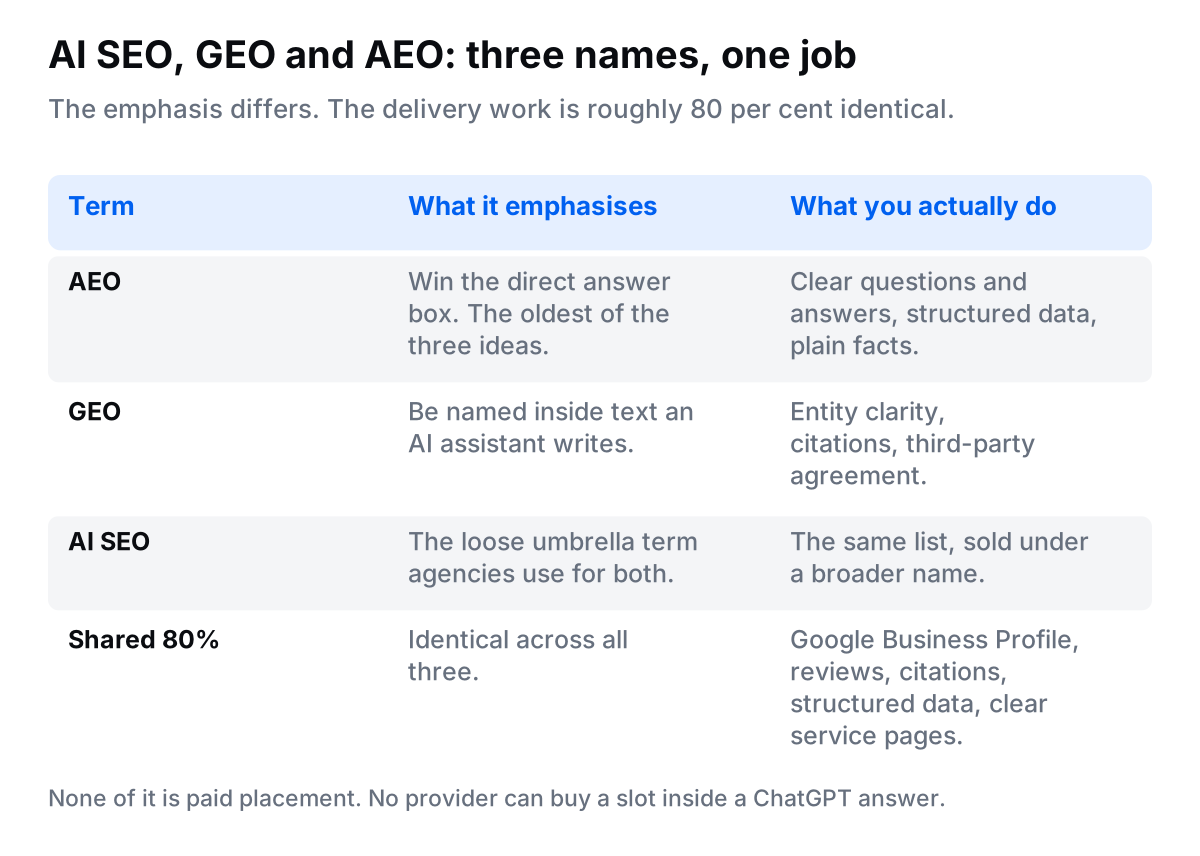
Three acronyms turned up in Irish agency pitches over the past year. AI SEO. GEO, or generative engine optimisation. AEO, or answer engine optimisation. If you run a garage in Carlow or a clinic in Cork, you do not need to pick a side. This guide defines each term plainly, shows where they overlap, and says what actually changes in the work. If you are new to the topic, start with what AI search visibility is, then come back here.
What do AI SEO, GEO and AEO actually mean?
Nobody owns these definitions. They came out of agency marketing, not a standards body, so usage varies. Here is the usage that is closest to consistent across the industry in 2026.
AEO (answer engine optimisation)
The oldest of the three. AEO predates generative AI. It grew up around featured snippets, "people also ask" boxes and voice assistants: the moment Google stopped showing ten blue links and started answering the question itself. AEO means structuring a page so a machine can lift a clean answer from it. Short, direct paragraphs. Question-shaped headings. FAQ markup. In Ireland, ePresence in Cork and Create108 in Drogheda both list AEO as a named service.
GEO (generative engine optimisation)
The term for the new problem. A generative engine does not just cite you, it rewrites you. ChatGPT, Claude, Perplexity and Google AI Mode read several sources, summarise them, and write a fresh recommendation. GEO covers everything AEO covers, plus two things AEO never had to worry about: whether the assistant describes your business correctly, and whether it names you at all when the user never mentioned you. "Generative engine optimisation Ireland" is the term most Irish agencies now use on their service pages.
AI SEO
The umbrella. Usually it means ordinary SEO plus GEO and AEO, sold as one package, sometimes with the addition of AI tools used to produce the content. It is the least precise of the three terms. When a provider says "AI SEO", ask which of the three things they mean, because the price range behind that phrase runs from a few hundred euro to several thousand a month.
Where do the three overlap?
Almost everywhere. All three depend on the same underlying fact: an AI assistant can only recommend a business it can read about, in language it can parse, confirmed by more than one source. That gives you a shared foundation.
| Task | AEO | GEO | Classic SEO |
|---|---|---|---|
| Clear service pages with prices and areas | Yes | Yes | Yes |
| FAQ and question-shaped headings | Core | Yes | Helpful |
| Structured data (LocalBusiness, FAQPage) | Core | Yes | Helpful |
| Google Business Profile and reviews | Yes | Core | Core for local |
| Third-party citations and directories | Some | Core | Backlinks instead |
| Checking how the AI describes you | No | Core | No |
| Measured by | Snippet wins | Mentions and citations | Keyword position |
Read down the columns and the point is obvious. If you do the shared work well, you are doing all three. The arguments between agencies are mostly about labels.
What actually changes in the work?
Six things move when you shift from ranking-first SEO to visibility-in-answers. These are the parts an AI visibility audit Ireland should look at first.
- Entity clarity. One plain sentence that states what you are, where you are and who you serve, repeated word for word on your homepage, your Google Business Profile and your About page. Vague taglines lose. "Electrician covering Waterford city and county" wins.
- Google Business Profile. Every field filled, correct primary category, service list, service area, real photos. For local questions, this is the highest-value hour of work available to a small business.
- Reviews. Honest ones, asked for on the day the job finishes, replied to. Reviews are the structured third-party evidence assistants lean on hardest. Never offer anything in exchange for a rating.
- Citations and mentions. Same name, same phone, same address, everywhere. Chamber listings, trade registers, supplier "find an installer" pages, local news. Each one is a second source agreeing with you.
- Structured data. LocalBusiness or a more specific type, plus FAQPage on pages that have real questions. It removes the guesswork for a crawler.
- Clear service pages and llms.txt. One page per service, each stating what it is, who it suits, a price range, and how to book. An
llms.txtfile at your site root lists your key pages in plain markdown for AI crawlers. It is cheap to add and a handful of assistants now read it, but treat it as a small bonus, not a strategy. No engine has committed to it.
What does not change?
- There is no paid placement. You cannot buy a slot inside a ChatGPT, Claude or Perplexity answer. Any provider implying otherwise is describing advertising, which is a separate product.
- Content quality still decides it. Google's own guidance on AI features in Search says there are no special requirements beyond being indexable and useful.
- Technical basics still gate everything. If your site is slow, uncrawlable, or blocking OAI-SearchBot, ClaudeBot and PerplexityBot in robots.txt, no amount of GEO strategy helps.
- It takes time. Faster than classic SEO, but not instant. Six to twelve weeks for the first mentions.
Which of the three matters for a local Irish SME?
For a small business serving one or two counties, the ranking is straightforward.
First, the local basics. Google Business Profile and reviews. Most Irish SMEs I look at are losing AI mentions on this alone, and it costs nothing but time. FMOps was in that position itself when it started selling this service, which is not a comfortable thing to admit but is the honest state of most small consultancies.
Second, GEO. Your customers ask assistants open questions: "who is a good bookkeeper in Kilkenny for a sole trader?" Nobody types your name. Being named in an answer where you were never mentioned in the question is the whole prize, and that is GEO's territory.
Third, AEO. Worth doing, cheap to do, and it falls out of good GEO work anyway. Question-shaped H2s and FAQ schema take an afternoon.
Last, the AI SEO label. Ignore the term when you shop. Judge the deliverables.
Find out which of these your business is failing
Run the free AI visibility check to see whether ChatGPT, Claude and Perplexity name your business for the questions your customers ask, and what they cited instead. If you want it done for you, the AI visibility audit and retainer runs from €750 a month, or book a free call.
How do you measure any of it?
The same way for all three names, because there is no Search Console for ChatGPT. Write 20 to 40 questions a real customer would ask, mixing service and place. Ask each one in ChatGPT, Claude, Perplexity and Google AI Mode. Screenshot every answer, because AI answers change and you cannot go back later. Record three numbers: how many prompts named you, how many cited a page of yours, and what the assistant said about you when it did. Repeat monthly with the same prompt set.
That routine is what separates a real GEO engagement from a rebadged SEO retainer. If a provider cannot show you a prompt set and month-on-month screenshots, they are selling you SEO with a new label. For what any of this should cost, see our guide to GEO and AI SEO costs in Ireland. For who sells it here, see our roundup of AI visibility audit services in Ireland. And for the practical checklist, read how to get recommended by ChatGPT.
Frequently asked questions
What is the difference between GEO and AEO?
AEO (answer engine optimisation) is about winning the direct answer box: short, clean, liftable answers on your page. GEO (generative engine optimisation) is about being named and described correctly inside text an AI assistant writes from several sources. GEO includes AEO. For a small business the delivery work is about 80 per cent the same.
Is AI SEO just SEO with a new name?
Partly. The foundation is identical: a fast, crawlable site with clear pages. What is genuinely new is the measurement, by prompts and citations rather than keyword positions, and the focus on third-party agreement across your Google Business Profile, reviews and directory listings.
What does GEO stand for?
GEO stands for generative engine optimisation. It is the work of making a business more likely to be named and cited by AI assistants such as ChatGPT, Claude, Perplexity and Google AI Overviews.
Can I pay to appear in ChatGPT or Google AI Overviews?
No. There is no paid placement inside AI answers. Anyone offering guaranteed placement is either describing paid advertising, which is a different product, or overselling. You earn a mention by being clear, consistent and well reviewed across the web.
Do I need llms.txt for GEO?
It is a cheap addition, not a strategy. An llms.txt file lists your key pages in plain markdown at your site root. Some AI crawlers read it, no engine has committed to it, and it will not fix a site with unclear service pages or an empty Google Business Profile. Do the basics first.
Which should an Irish small business start with?
Start with your Google Business Profile and honest reviews, then clear service pages with prices and service areas, then question-shaped FAQs with schema. That order covers AEO and GEO at once and costs nothing but time.

Fionn Murphy runs FMOps, a one-person consultancy in Waterford, Ireland. He helps small Irish businesses get found in AI search, ship simple websites, automate admin, and set up Claude for their teams. LinkedIn · Book a free 30-minute call